Bounced emails aren't just a nuisance. They can quickly sabotage all of your email marketing and cold outreach efforts.
But what causes an email to bounce?
Before we can explore the 'why,' let's take a look at the two email bounce types to better understand the mechanics involved with sending an email message.
Email bounce types explained
There are two types of email bounces:
- Soft bounce - Some temporary errors, such as a full mailbox or a timeout, cause soft bounce emails.
- Hard bounce - Email hard bounces occur when there is a fixed error, such as attempting to send an email to an invalid email address or an invalid email domain.
Both email bounce types factor into your campaign's overall bounce rate. It's essential to monitor the bounce rates of your campaign for an unexpected or unusual rise in email bounces so that you can take action before it causes lasting damage to your domain or IP. Both soft and hard bounces can have a negative impact on your email marketing performance.
How do bounced emails impact email marketing performance?
Bounced emails are a powerful threat to your email marketing performance and ROI.
The reason for this is simple – you cannot generate engagement and conversions if your email doesn't reach someone. However, the threat of high email bounce rates doesn't stop at the campaign level. Continued bounced emails over time negatively impact your sender reputation/sender score.
Your reputation is what internet and email service providers (ISPs & ESPs, respectively) use to determine the trustworthiness of an email sender. Email is used daily by bad actors looking to deceive readers with spammy content and phishing scams. Those types of senders care little for safe sending practices and will typically have domains and IP addresses with notoriously high email bounce rates. If your business also has a high email bounce rate, you immediately look suspicious regardless of what's in your emails.
What happens when your sender reputation declines?
ISPs and ESPs recognize the emails coming from your domain and are more likely to filter your emails to spam automatically. They may also reject your emails outright, resulting in another bounced email. These negative signals continue to pile up and can make it difficult, if not impossible, for your emails to reliably reach your subscribers' inboxes.
Your email service provider will also take notice. Most prominent ESPs like Mailchimp or Zoho enforce strict policies regarding their users and email bounce rates. If you bounce too many emails in one campaign or over time, they can and will suspend your business account.
To summarize how bounced emails impact email marketing performance:
- Bounced emails can't reach customers to create engagement and sales
- High email bounce rates damage your business sender reputation
- As your reputation declines, your email deliverability declines and puts your emails in spam
- High email bounce rates also indicate other sending issues, which can cause your ESP to suspend your account
How to reduce email bounce rate
Understanding email bounce types gives us more information to identify why an email bounce may occur.
How to reduce soft bounce emails
Because temporary issues cause a soft bounce email, they're often out of your control to prevent. It's up to the mailbox owner or service provider to remedy bounce-causing issues like full mailboxes or connections. There's also anti-spam technology called greylisting, which temporarily rejects emails from new senders for up to 15 minutes.
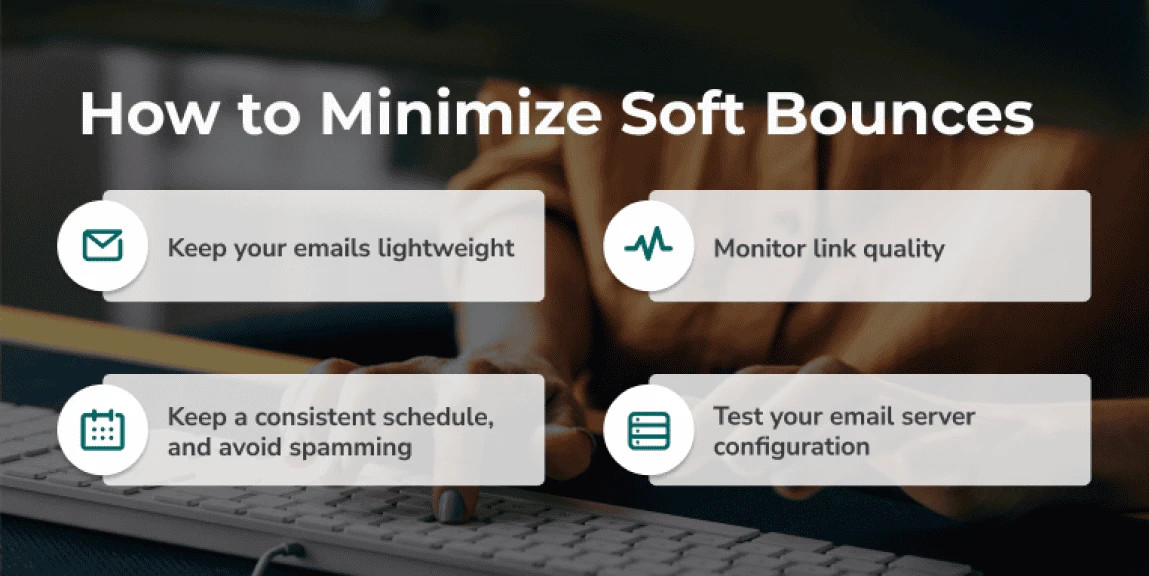
Here's how you can minimize the number of bounces that occur:
- Keep your emails lightweight - Use small file sizes, particularly when adding images or attachments to an email. If the file is too big, it can cause timeout issues, resulting in a bounce.
- Keep a consistent schedule, and avoid spamming - ESPs don't like it if you send too many emails. Avoid soft bounce emails by sticking to a schedule that's an optimal time for your readers.
- Monitor link quality - Just like with your website, adding low-quality, spammy links to an email can hurt its deliverability. Be mindful of what you share with your readers.
- Test your email server configuration - A well-configured email server with SMTP should automatically reattempt delivery if it receives a 4xx (temporary) error. This is critical for any temporary soft bounce causes, including common greylisting measures. If your server is configured properly, it should automatically re-attempt delivery after the greylist period passes, allowing it to reach the mailbox.
How to reduce hard bounces
Email hard bounces are a primary concern. If you're experiencing a high volume of hard bounced emails, it's typically caused by using invalid email addresses or an improperly configured mail server.
Here's how you can reduce email bounce rates:
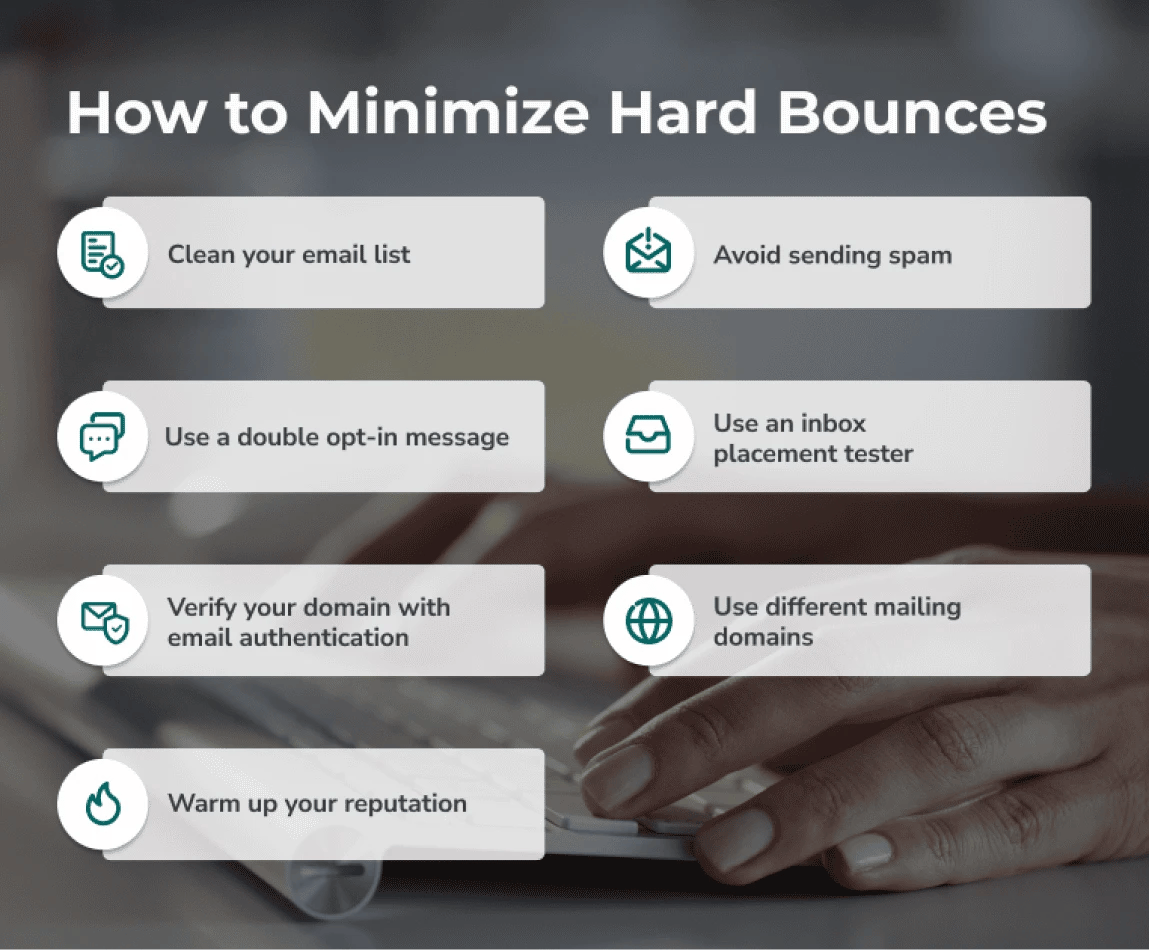
- Clean your email list - Before you add an email address to your subscriber list, you must use an email validation tool to clean it. This service ensures that the mailing address is valid and being used by an actual person. Remove any invalid email addresses from your list.
- Use a double opt-in message - A double opt-in confirmation is now standard for email marketing. Whenever a user signs up with their email address, they must click a button in a confirmation email. Doing this verifies their address and their intent to subscribe.
- Verify your domain with email authentication - Previously option, email authentication records like SPF, DKIM, and DMARC are now required by major mail providers like Google, Yahoo, and Microsoft. These records verify your business identity and ownership of the mailing domain, which helps your sender reputation and reduces the chance of email bounces.
- Warm up your reputation - If you're experiencing hard bounces, your sender reputation may already be damaged. Using an email warmup tool will automatically improve your sender score by sending regular emails that receive positive engagement signals like opens, clicks, and replies. Warming up your domain can help reverse existing damage while you implement all of these practices into your email strategy simultaneously.
- Avoid sending spam - Be mindful of the emails you send to users. Be explicit about what's in the email from your subject line, and avoid using spammy jargon that you'd typically see in a junk email (free stuff, asking for sensitive information, too good to be true deals, etc.).
Additionally, spam also is characterized by your sending patterns. Send emails in a predictable pattern (set days and times) to avoid triggering any spam filters. - Use an inbox placement tester - If you have any doubts about your campaign hard bouncing, use a deliverability tester. This tool allows you to send your campaign to a list of privately owned addresses so that you can see if your campaign has been delivered and where it lands.
- Use different mailing domains - If you're looking to email new addresses, especially ones with risk like a catch-all, look into setting up different domains for your teams. Doing this is particularly valuable for anyone involved in cold email outreach, as you don't want testing or experimentation to cause unnecessary damage to your primary business domain.
Want to verify an email address?
Check out our free email verifier and list evaluator!
Using email bounce verification services
Most of the time, an email hard bounce occurs because of an invalid email address. Whether this is a one-off occurrence or if hard bounces continue to happen due to irregular list cleaning, it's never too late to get started.
Here's how you can incorporate bounce verification tools into your current workflow:
1. Download your current mailing list from your CRM or mail provider.
2. Upload your list to an email verification service. When you upload your list to ZeroBounce, it will automatically look for any duplicates on your list and remove them for you.
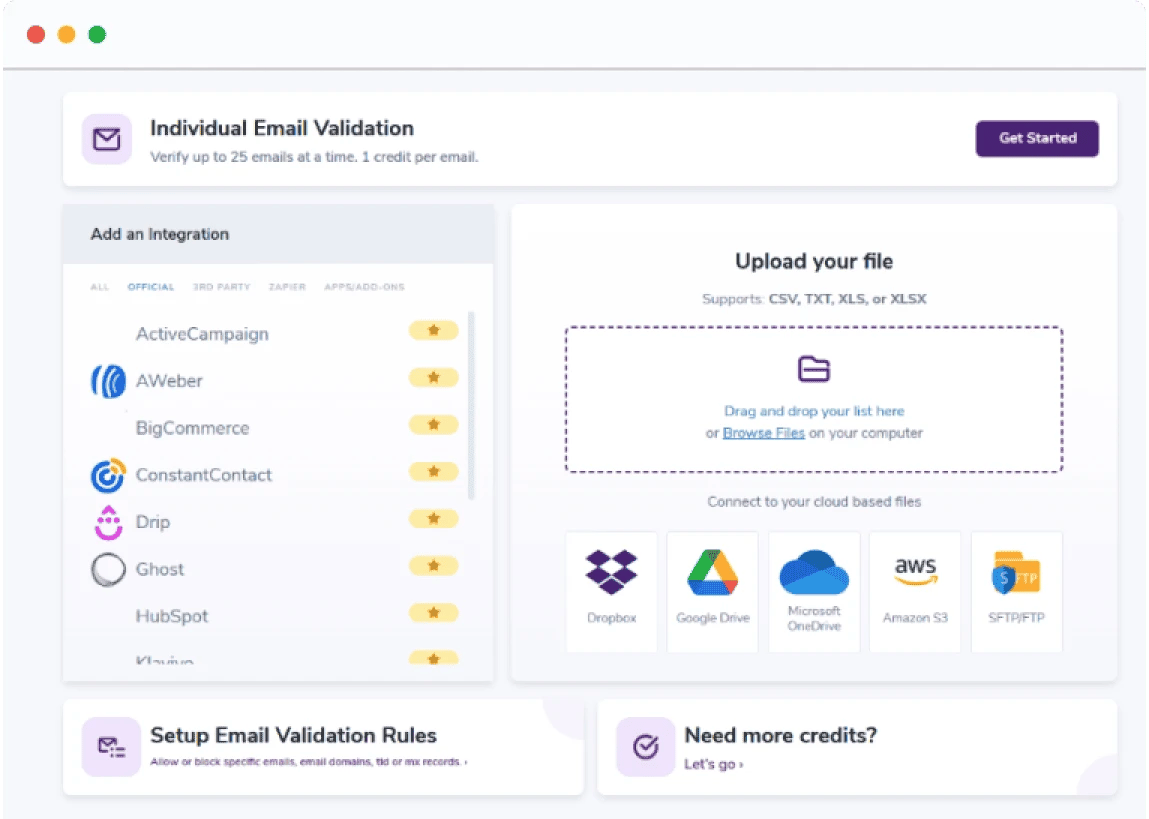
3. Allow the email verifier to verify and validate your email contacts. The duration will depend on the size of your list, and you'll automatically be notified via email when the process completes.
4. Download your new clean list of email addresses. You'll also receive a report on which email addresses were invalid or high-risk to get a better sense of what type of data you're acquiring.
Bounce verification services are simple to use and an inexpensive way to drastically reduce email bounce rates. It's a foundational tactic for an email sender or marketer that you can't avoid doing. Some ESPs are so strict on email list cleaning that they can immediately detect when bad data has been uploaded to their platform if they've seen those addresses or that list prior.
In addition to direct uploads for cleaning, here are some additional ways you can leverage email bounce verification services:
- Use an integration with your mail provider, CRM, or ESP - Some email verification platforms provide direct integrations with many marketing and sales tools you already use. ZeroBounce currently features 60+ integrations.
With an integration enabled, you can sync your email address contacts with the tool and clean them automatically with little effort. - Use a real-time email verification API - The best way to reduce email bounce rates is to avoid gathering invalid data in the first place. When added to your website, signup forms, landing pages, or checkout screens, an email verifier API will automatically detect and block invalid or risky email addresses. It's also useful for detecting common errors like typos.