Bounced Emails
Why They Happen and How to Stop Them
Is your email bounce rate bringing your email campaigns down?
Learn about the email bounce types, how they hurt your performance, and what you can do to reduce email bounce rate now.

Is your email bounce rate bringing your email campaigns down?
Learn about the email bounce types, how they hurt your performance, and what you can do to reduce email bounce rate now.
Bounced emails aren't just a nuisance. They can quickly sabotage all of your email marketing and cold outreach efforts.
But what causes an email to bounce?
Before we can explore the 'why,' let's take a look at the two email bounce types to better understand the mechanics involved with sending an email message.
There are two types of email bounces:
Both email bounce types factor into your campaign's overall bounce rate. It's essential to monitor the bounce rates of your campaign for an unexpected or unusual rise in email bounces so that you can take action before it causes lasting damage to your domain or IP. Both soft and hard bounces can have a negative impact on your email marketing performance.
Bounced emails are a powerful threat to your email marketing performance and ROI.
The reason for this is simple – you cannot generate engagement and conversions if your email doesn't reach someone. However, the threat of high email bounce rates doesn't stop at the campaign level. Continued bounced emails over time negatively impact your sender reputation/sender score.
Your reputation is what internet and email service providers (ISPs & ESPs, respectively) use to determine the trustworthiness of an email sender. Email is used daily by bad actors looking to deceive readers with spammy content and phishing scams. Those types of senders care little for safe sending practices and will typically have domains and IP addresses with notoriously high email bounce rates. If your business also has a high email bounce rate, you immediately look suspicious regardless of what's in your emails.
What happens when your sender reputation declines?
ISPs and ESPs recognize the emails coming from your domain and are more likely to filter your emails to spam automatically. They may also reject your emails outright, resulting in another bounced email. These negative signals continue to pile up and can make it difficult, if not impossible, for your emails to reliably reach your subscribers' inboxes.
Your email service provider will also take notice. Most prominent ESPs like Mailchimp or Zoho enforce strict policies regarding their users and email bounce rates. If you bounce too many emails in one campaign or over time, they can and will suspend your business account.
To summarize how bounced emails impact email marketing performance:
Understanding email bounce types gives us more information to identify why an email bounce may occur.
Because temporary issues cause a soft bounce email, they're often out of your control to prevent. It's up to the mailbox owner or service provider to remedy bounce-causing issues like full mailboxes or connections. There's also anti-spam technology called greylisting, which temporarily rejects emails from new senders for up to 15 minutes.
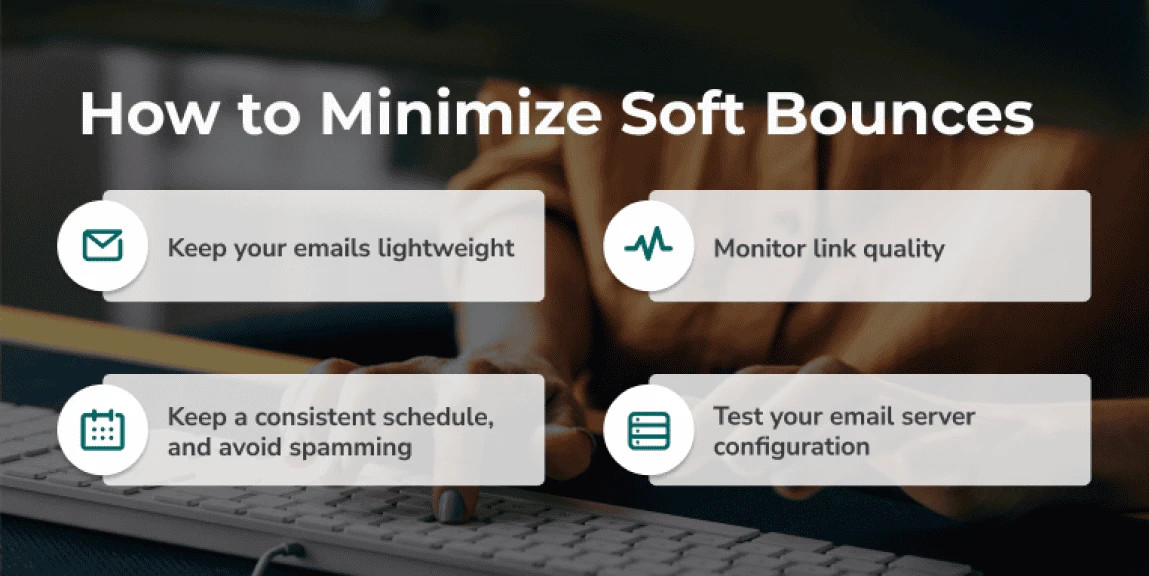
Here's how you can minimize the number of bounces that occur:
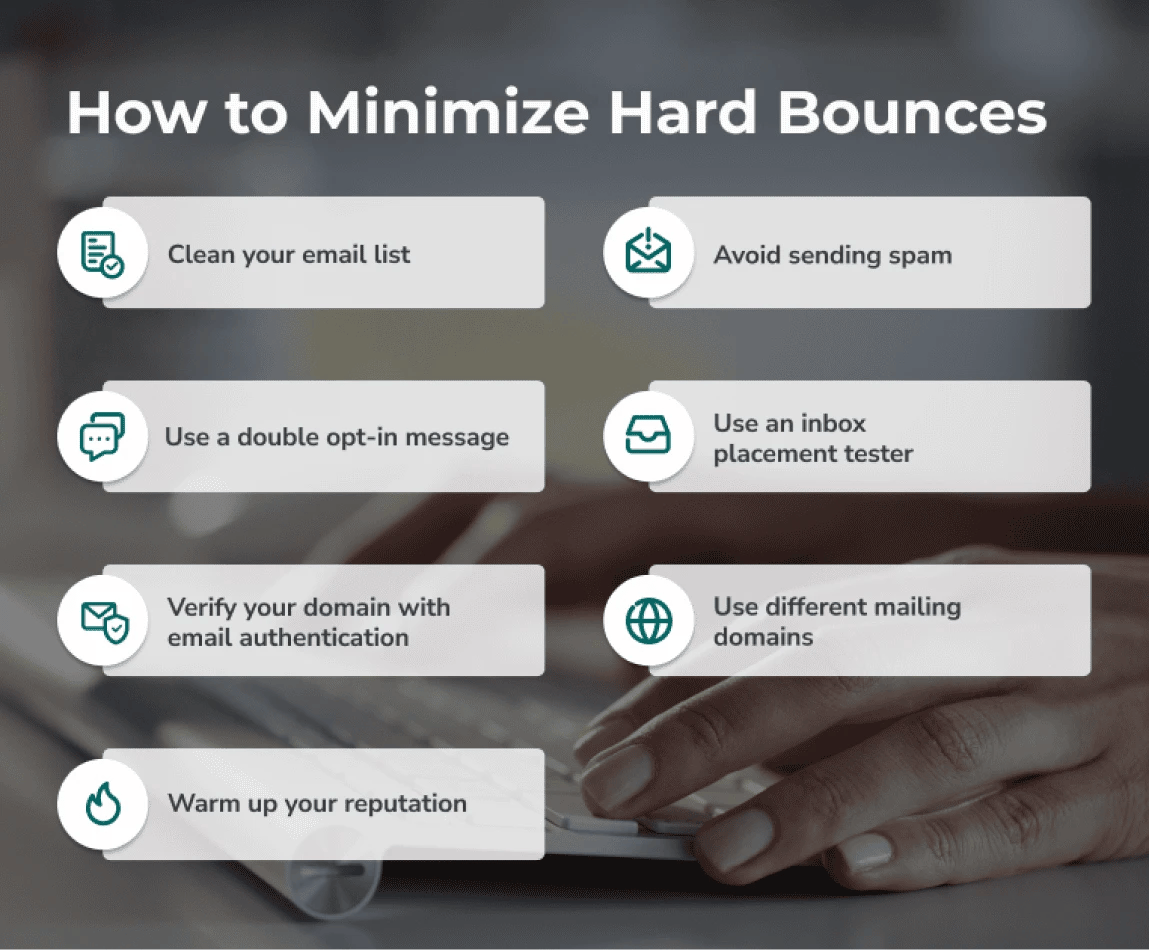
Email hard bounces are a primary concern. If you're experiencing a high volume of hard bounced emails, it's typically caused by using invalid email addresses or an improperly configured mail server.
Here's how you can reduce email bounce rates:
Check out our free email verifier and list evaluator!
Most of the time, an email hard bounce occurs because of an invalid email address. Whether this is a one-off occurrence or if hard bounces continue to happen due to irregular list cleaning, it's never too late to get started.
Here's how you can incorporate bounce verification tools into your current workflow:
1. Download your current mailing list from your CRM or mail provider.
2. Upload your list to an email verification service. When you upload your list to ZeroBounce, it will automatically look for any duplicates on your list and remove them for you.
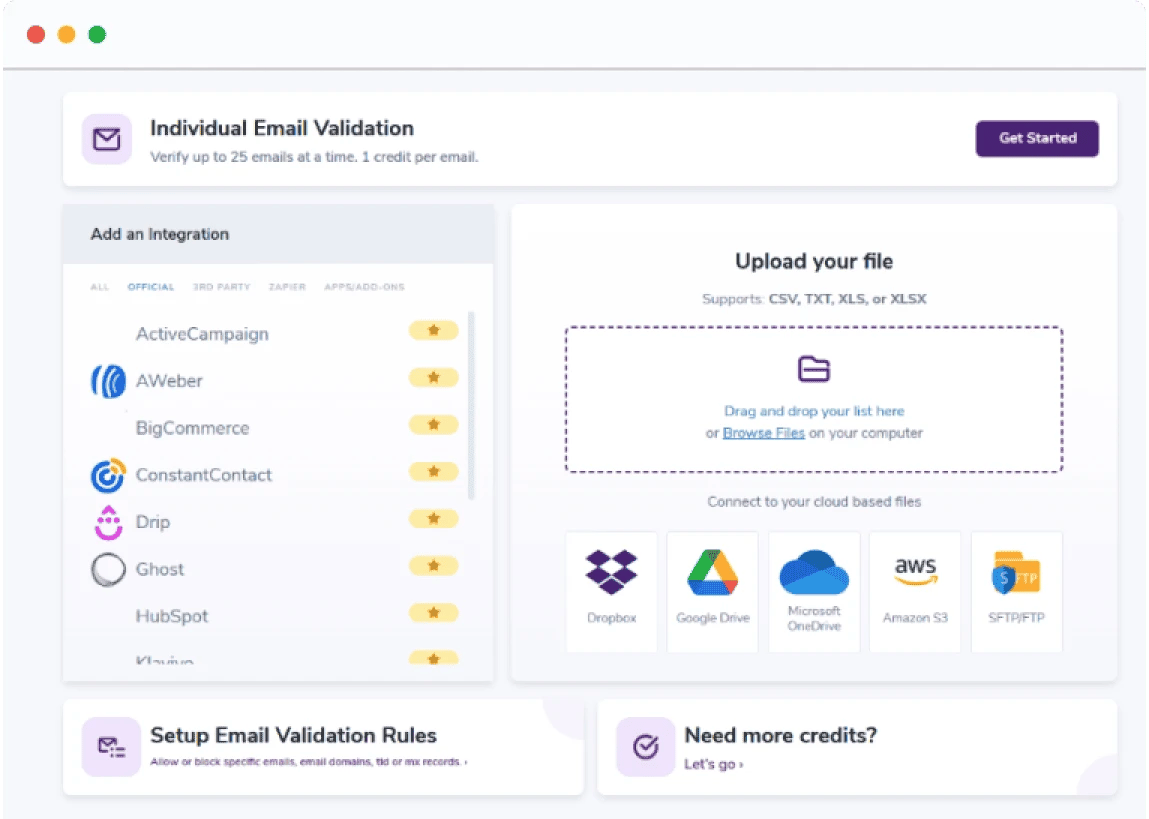
3. Allow the email verifier to verify and validate your email contacts. The duration will depend on the size of your list, and you'll automatically be notified via email when the process completes.
4. Download your new clean list of email addresses. You'll also receive a report on which email addresses were invalid or high-risk to get a better sense of what type of data you're acquiring.
Bounce verification services are simple to use and an inexpensive way to drastically reduce email bounce rates. It's a foundational tactic for an email sender or marketer that you can't avoid doing. Some ESPs are so strict on email list cleaning that they can immediately detect when bad data has been uploaded to their platform if they've seen those addresses or that list prior.
In addition to direct uploads for cleaning, here are some additional ways you can leverage email bounce verification services:
Bounced emails can be caused by temporary errors, such as a full mailbox or an email server timeout. They can also be caused by a permanent error, such as an invalid email address, which results in a hard bounce.
Try ZeroBounce now with a free account!
Get 100 free monthly email verifications when you sign up with a business/premium domain