
Written by
24 March, 2025
When you send an email, your intention is that it reaches your recipient’s inbox. But it doesn’t always work that way.
Some of the emails you send land in spam, but others bounce. What does it mean when your emails bounce? It means that email never reaches your target audience.
Did you know that
It’s more than frustrating. Bounces diminish your sender reputation, hurting future changes of arriving in the inbox. Hard bounces and soft bounces affect your email deliverabilityⓘ in different ways. We’re going to explore soft vs. hard bounces and how to stop them.
When an email bounces, it means it wasn’t delivered to the recipient. There are various reasons for a bounce, whether on the recipient’s end or yours. There is a difference between hard and soft bounceⓘ emails.
So, what is a soft bounceⓘ in email? And what is a hard bounceⓘ in email?
A soft bounceⓘ happens when an email can’t be delivered temporarily. Here are some common reasons for the types of email bounces:
A hard bounceⓘ happens when an email can’t be delivered for a permanent reason. Here are some common causes:
Whether it’s soft or hard email bounces, they will affect your email deliverability. Regardless of the type of bounce, keep your bounce rates below 2% to prevent your
You now know the basic difference between a hard vs. soft bounceⓘ. But that’s just the tip of the iceberg.
Let’s look at each one in detail.
Hard bounces indicate a permanent issue with the email address you’re trying to reach. Here are some of the reasons why a hard email bounce could occur:
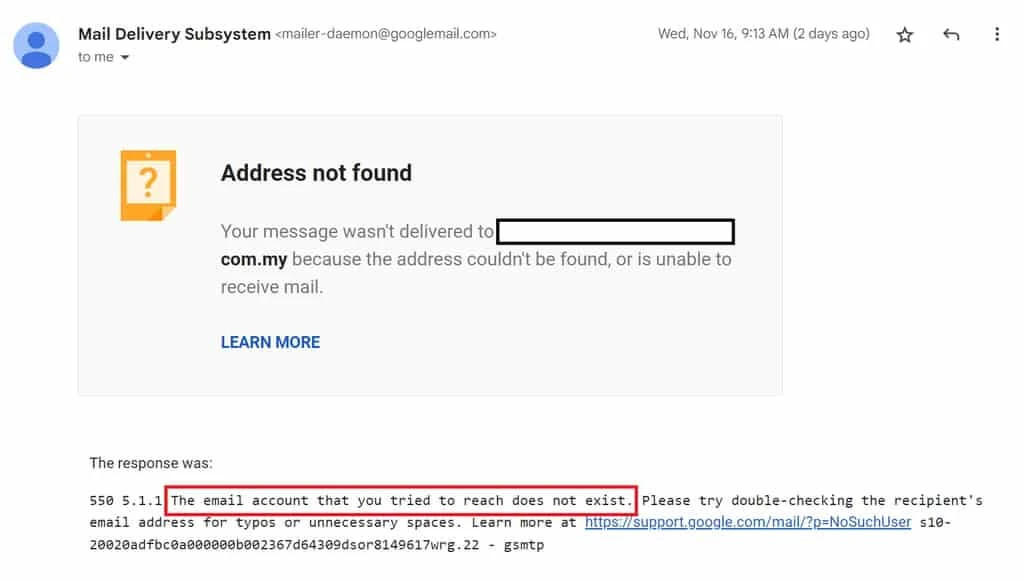
This is an example of a hard bounce email. Notice that Gmail also pointed out the bounce reason, specifying that the email account doesn’t exist.
With ZeroBounce’s email verification tools, you can identify and eliminate invalid addresses before they harm your campaigns.
“With hard bounces, the course of action is plain and simple: remove them right away,” says ZeroBounce’s Deliverability Team Leader
Some email service providers (ESPs), like Mailchimp and HubSpot, will remove hard bounced emails from your database. That way, you can’t email them again.
“The downside, though, is that the damage is already done,” Vlad adds. “ESPs cannot predict which emails will bounce. Cleaning them after they bounce helps your future campaigns, but why risk getting bounces in the first place?”
The email deliverabilityⓘ pro advises:
“When your is at stake, letting your ESP deal with your bounces isn’t enough. As a sender, it’s your responsibility to make sure you’re reaching out only to genuine email addresses.”
The best way to go about that is to remove invalid and fake emails before they can bounce and hurt your sender reputation. It takes only minutes for an like ZeroBounce to check your contacts and help you prevent hard bounces.
When your emails soft bounceⓘ, it means they haven’t reached your recipient’s inbox – but they might after several retries. Think of these emails as being somewhere in limbo. Some may make it to the mailbox, others will end up hard bouncing.
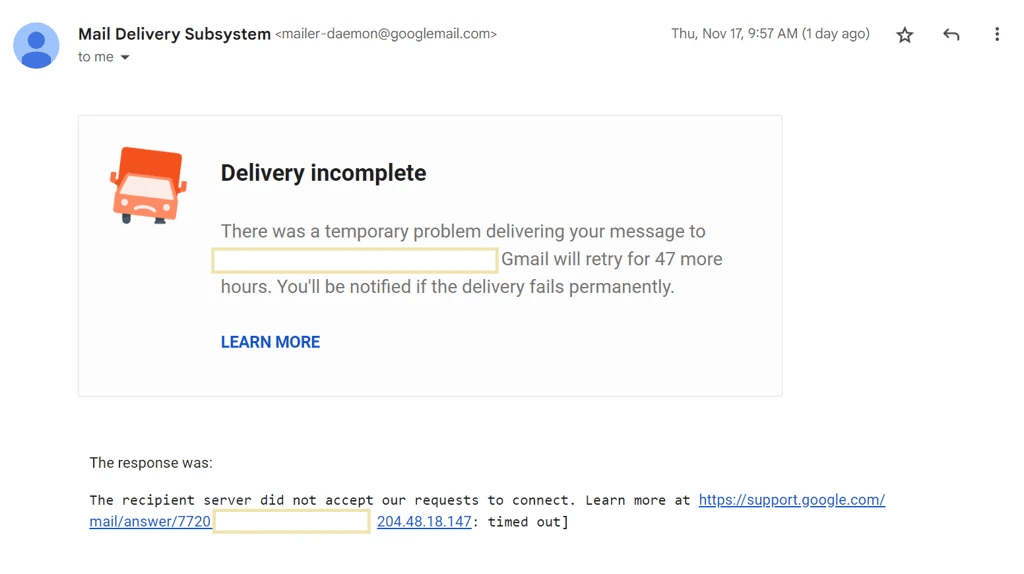
This is an example of a soft bounce email. Notice that Gmail says it will retry to deliver this email for 47 more hours. If Gmail fails to deliver it during that timeframe, it will convert this soft bounce into a hard bounce.
Here are some of the reasons your email could soft bounceⓘ:
Although soft bounces are temporary issues, if they continue to happen, soft bounces can turn into hard bounces. Here’s how:
To prevent this, monitor soft bounces, clean up your email list regularly, and remove addresses that consistently fail to receive messages.
Soft bounces can be tricky because, unlike hard bounces, they are temporary—but if left unchecked, they can turn into permanent bounces. This will undoubtedly hurt your email deliverabilityⓘ and sender reputation. Bottomon line – you shouldn’t dismiss soft bounces. Keep in mind that 28% of email lists (that’s more than a quarter) will go bad every year. It’s why it’s essential to monitor soft bounces carefully and be proactive. Here’s how you can manage them effectively:
Most email service providers (ESPs) track bounce rates and categorize them as soft or hard bounces. Regularly check your email reports to identify addresses that are frequently bouncing. Pay attention to patterns—if certain recipients always result in soft bounces, they may need closer evaluation. Ignoring bounces is never the answer.
Every ESP has a different policy for retrying delivery after a soft bounceⓘ. Some will attempt to resend the email multiple times within a set period before marking it as a hard bounceⓘ. Understanding your ESP’s retry rules helps you know when a soft bounceⓘ might escalate into a permanent issue. Some ESPs make this information available on their website, but you should also check with the support team if the details are unclear to you. Keeping track of these policies lets you proactively improve deliverability.
If an email continues to bounce after multiple attempts, it means there’s a long-term problem, such as an abandoned inbox or server issues. To keep your list clean, remove these addresses before they turn into hard bounces.
Tools like ZeroBounce’s email verification tool can help validate addresses and flag those that are risky or inactive, allowing you to maintain a healthy email list.
If you get a soft bounceⓘ, but don’t want to part ways immediately, you can also try quarantining that email address and testing it later. If it’s still bouncing, best to err on the safe side and excise that email address from the list.
When an email soft bounces, your ESP will retry to deliver it over a period of two to three days. Each ESP has its own rules to determine when a soft bounceⓘ becomes a hard bounceⓘ.
For instance, Mailchimp will allow seven soft bounces for an email address with no previous subscriber activity before turning it into a hard bounceⓘ. For contacts who’ve engaged with your emails before, Mailchimp will allow 15 soft bounces. Contact your ESP to find out about its rules.
Failing to manage soft bounces and hard bounces can lead to bigger problems for your email marketing efforts.
Although soft bounces are considered less harmful, they are still problematic.
“Most ESPs calculate and score their individual reputations by your overall bounce rate, combining soft and hard bounces into a single metric,” says ZeroBounce Deliverability Specialist Andrei Ion. He went on to say, “So, while by themselves they’re less of a threat, a high soft bounceⓘ rate can add to sender-specific reputation risks as they inflate your overall bounce rate.”
Here’s why staying on top of them is so important:
The upsides to monitoring and addressing email bounces promptly are numerous. Keeping email bounces low helps maintain your sender reputation, prevents you from landing on a blacklist, and ensure you’re making the most of your marketing efforts.
Tracking your bounce rate keeps you informed about your email marketing performance. Reducing it can help you maximize your marketing budget and improve deliverability. Here are nine proven tactics to lower your bounce rate.
Building a high-quality email list takes time, but the effort is worth it. A list of engaged subscribers leads to better deliverability and fewer bounces. Avoid purchasing email lists, as they often contain outdated or invalid addresses, increasing your bounce rate.
ZeroBounce recommends using a double opt-in process to ensure that new subscribers provide valid email addresses. This not only improves list quality but also keeps your sender reputation strong.
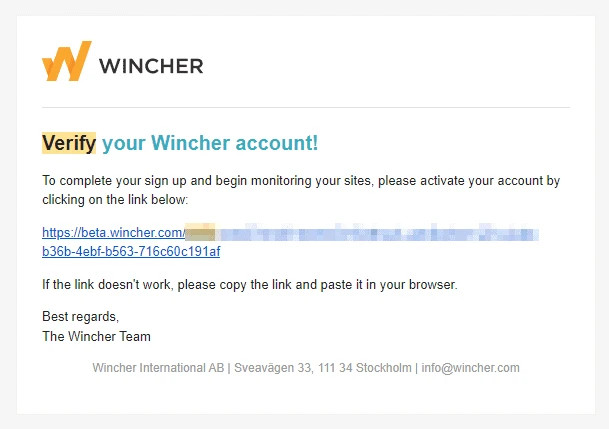
When you enable double opt-in, your new subscribers will get an email list this, prompting them to click a link and confirm they’d like to receive emails from you.
Double opt-in requires new subscribers to confirm their email addresses before being added to your list. This extra step ensures that you’re collecting legitimate, active emails and reducing fake or mistyped sign-ups.
Here’s how an effective confirmation email looks:
While single opt-in is faster, it increases the risk of fake or incorrect addresses slipping through, leading to more bounces. Double opt-in improves engagement and ensures that subscribers genuinely want to receive your emails.

Expert Tip:
ZeroBounce's email verification tool can automatically detect invalid email addresses before they become a problem, helping you maintain a clean and reliable list.
Regularly cleaning up your email list prevents hard bounces and repetitive soft bounces. If you continuously send emails to unreachable recipients, ISPs will start to flag al your messages as spam.
To keep your list healthy:
By maintaining a well-managed list, you’ll improve deliverability and ensure your emails reach real, engaged recipients.
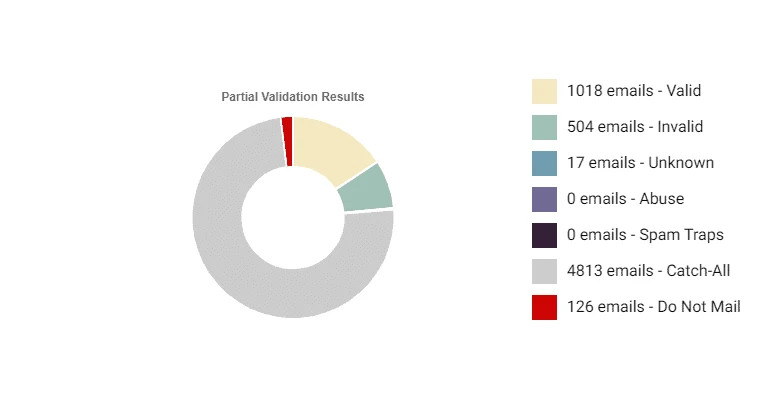
ZeroBounce customer found that more than 1,000 of his email contacts . Make sure to scrub bad emails off your list before they can bounce.
If some recipients never open your emails, it’s a sign they’re no longer engaged—or worse, their email addresses may no longer be active. Keeping inactive subscribers on your list can hurt your engagement rates and increase your bounce rate over time. It’s more likely that unengaged subscribers will give you headaches than reverse course and begin engaging.
While it may seem counterproductive to remove subscribers, it undboutedly improves your email performance. A scrubbed, engaged list means higher open rates, better conversions, and less pesky bounces. Instead of focusing only on the size of your email list, prioritize quality way more than quantity.
Expert Tip:
Use QR code technology to simplify sign-ups and reduce errors. New subscribers can scan a QR code that automatically converts your email address, subject line, and message into a pre-filled email. This eliminates the risk of typos and ensures accurate email collection.
If you , you’re less likely to get hard or soft bounces. But did you know you can go a step further and check all your new leads in real time – before they get on your list?
An email validationⓘ API is easy to connect to your sign-up forms and will check each new contact as it’s typed in. If someone makes a typo, the API will automatically suggest a correction, prompting the person to input a correct email address.
That’s not all: ZeroBounce’s real-time email verification APIⓘ detects more than 30 types of undesirable email addresses. Adding it to your forms allows you to stay on top of your email list hygieneⓘ and avoid hard and soft bounces.
Once you have subscribers on your email list, ensure that your brand remains at the top of their minds.
If people never receive emails from you, they’re likely to forget your brand. Worse still, when you do email them, they may report you as spam, further affecting your sender reputation and inbox reach.
Having regular communication with your audience also helps build a personal relationship with them and increases their chances of opening your emails. Showing up consistently is a good way to boost your open rates.
Emails sent via a free service, such as Gmail or Yahoo, rarely meet requirements set by DMARC. This makes them more likely to bounce. So, there’s no denying, email addresses associated with a company domain are better.
When you send emails from a business domain, you’re boosting your brand authority and look more professional.
Segmenting your database ensures your emails go to the most relevant audience. Use audience demographics, purchase history and interests to split your list into segments. Then, craft more targeted messaging for them.
As a result, your soft bounceⓘ rates decrease as your audience will find your emails relevant. They won’t block your emails or report them as spam.
You can also group your emails according to your audiences’ engagement. So, when you’re skeptical about your subscribers’ response, you can put them in a different segment.
This makes it easier to filter out hard bounces and soft bounces and improve your deliverability.
According to research, spam accounted for of emails sent in 2021. Email service providers thus have protocols in place to filter out spam.
To avoid having your emails sent to spam, avoid using:
Such overly promotional copy signals spam and it can increase your soft bounceⓘ rates.
Expert tip:
If you're conducting a cold email campaign, add a professional email signature to your email. Use to create a great email signature.
You can to reduce hard bounces and soft bounces by adding a CAPTCHA system.
This helps prevent fake email signups by bots. Having a good CAPTCHA system ensures only those who genuinely want to subscribe to your emails do so.
It’s critical to track your email bounce rateⓘ regularly to understand if your efforts are paying off or not. If you haven’t managed to reduce your bounce rate, double down on your email tracking to ensure that your email list is clean.
Finally, get some neutral third-parties to read your emails before you send them. Then, ask them for honest feedback to understand if they appear spammy. Incorporating this small step can go a long way in reducing your hard and soft bounceⓘ rates.


From content marketing to PR projects, we count on Paul to write content that helps and inspires. Paul has a rich background in content creation as a writer, researcher and interviewer. For the past 20 years, he has conducted more than 1,000 interviews distributed via radio and podcasts. In his free time, Paul is always down for a long walk or a good movie, and loves trying out new restaurants.
A hard bounce is when an email fails to reach a mailbox because of a permanent issue, while a soft bounce is when your email doesn’t get delivered due to a temporary problem. Soft bounces can turn into hard bounces and affect your sender reputation and email deliverability.
Test our ZeroBounce's free email verifier tool by entering an email below.
or