Invalid Emails Guide
How do you prevent invalid emails from being added to your email list?
Whether you're aware of it or not, invalid emails are in your database and mailing lists. Learn where they come from and how email list hygiene plays a role.

Whether you're aware of it or not, invalid emails are in your database and mailing lists. Learn where they come from and how email list hygiene plays a role.
Email is the go-to method of communication for businesses. But just like with phones or mailing addresses, you need to ensure you have the correct data to connect with your customers and leads.
Any inaccurate, expired, or fake data are considered invalid emails.
But how exactly does an email expire and become invalid? Let's examine the possible causes, as messaging invalid email addresses can have severe consequences.
Some email addresses are always invalid. For example, an email address that doesn't use the required syntax is considered invalid.

Additionally, an email address is considered an invalid email if the username or domain doesn't exist or contains typos. These email addresses are always considered invalid.
However, an email address can also become invalid if the domain owner deletes the address. There are various reasons why this may happen:
Invalid emails constantly appear due to email list decay. In fact, almost 28% of the average email list will decay annually. One in four valid email addresses found on your list may become invalid emails. This happens irrespective of business or industry type.

The immediate result of emailing an invalid email address is a hard bounce. Because no mailbox exists, the provider will send you your email with a return message.
The occasional hard bounce is inevitable. However, invalid emails are far more of a concern for businesses and other mass email senders. If too many outbound emails bounce (more than 2% of sent emails), it can damage your email sender reputation.
Think of your sender reputation as a credit score for your business mailing domain and IP address. To send more emails successfully, you need a positive reputation. If your reputation is negative, internet service providers will trust your emails less and be more likely to send your emails to spam. ISPs may also reject your emails, resulting in more bounces.
In other words, invalid emails hurt your email deliverability.
To prevent invalid emails from worsening your sender reputation, you need to detect invalid emails with email verification.
Email verification or email list hygiene tools can verify and validate email addresses. Signup forms and CMS systems will often contain a basic regex checker, but this only detects errors in syntax. You'll need a more advanced validation method to ensure that the email address exists and is configured to receive incoming email messages.
Here's how more advanced email verification systems work:
As a business owner or marketer, you're likely acquiring new email addresses through common marketing mediums like your newsletter signup or landing pages. You can also add a real-time email verification tool to those registration forms to prevent invalid emails from making it through.
Paid email verification platforms typically include real-time verification APIs. Ensure that the provider offers this feature before selecting the right service for your team.
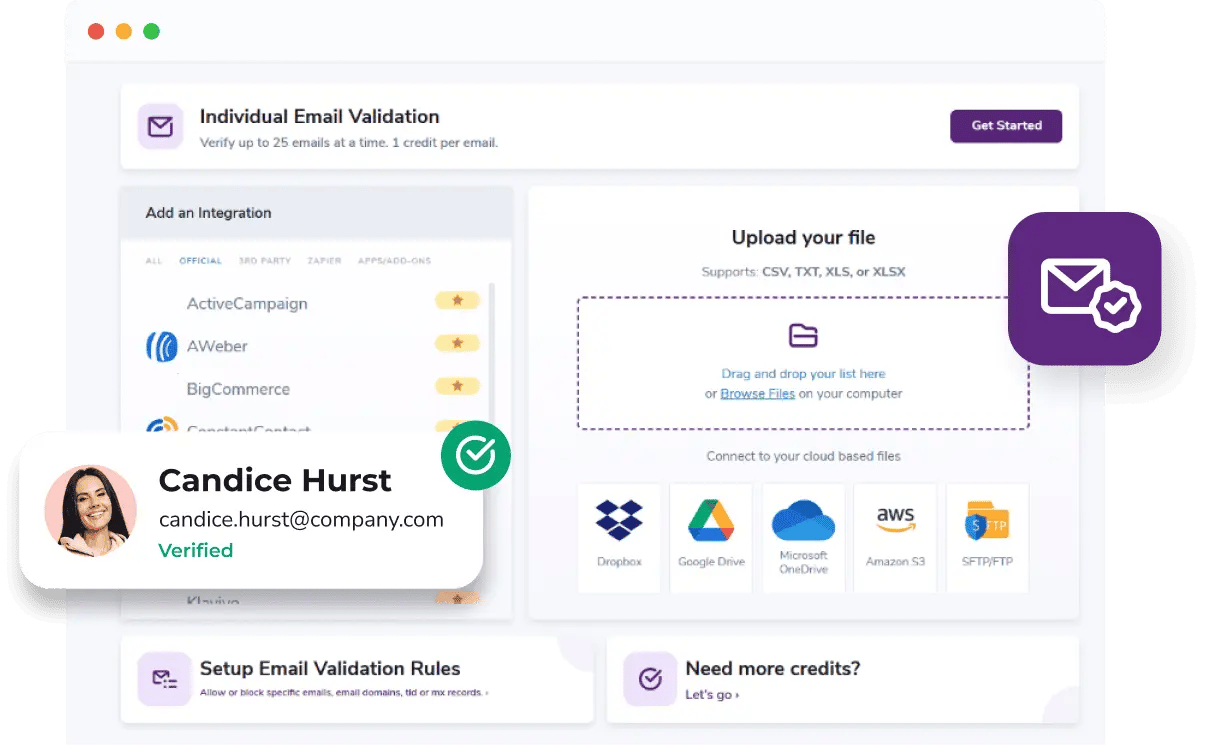
Invalid emails are prevalent everywhere. Valid emails on your list can become invalid over time, and new data sources frequently provide you with invalid or other high-risk email address types.
As a result, the only way to maintain a valid email list is through proactive effort. Here are our recommendations on how to prevent invalid emails from cluttering up your database:
An invalid email address is any address that cannot receive an incoming email message. An email address might be invalid for a variety of reasons, including invalid syntax or format, typos, a nonexistent username or domain, or a configuration that doesn't accept incoming emails.
Email validation can prevent invalid emails from entering your database. Any time you acquire a new email address for a contact, validate it with an email verification and validation tool to ensure the address is legitimate and configured to receive your incoming message.
Any email messages sent to invalid emails will result in a hard bounce. Your email will be returned to you with a message indicating that the target email address isn't a valid mailbox. A high bounce rate caused by too many hard bounces negatively damages your sender reputation and email deliverability.
You can validate an email address with any email validation tool. Enter the address you wish to validate, and the service will perform a series of checks and return a result to you in seconds. If the result is an invalid email, check for typos or other entry errors. If none are present, discard the email address for safety.
Create your free ZeroBounce account now to get started.
Get 100 free monthly email verifications when you sign up with a business/premium domain.