
A few small tweaks can make a billing notice, a follow-up, or a support reply easier to read and less stressful. Here’s how to write customer emails that strike the right tone in three common customer service scenarios.
The other day, I got an email from my internet provider that sent my anxiety through the roof. My first thought was, “Are you kidding me? One more thing to deal with!”
I kept thinking about that email. To the person who sent it, it was probably routine. But I was still trying to figure out how worried I should be. I was the one who had to open the email and figure out what hoops I’d need to jump through.
One detail from our study on passive-aggressive email phrases stuck with me.
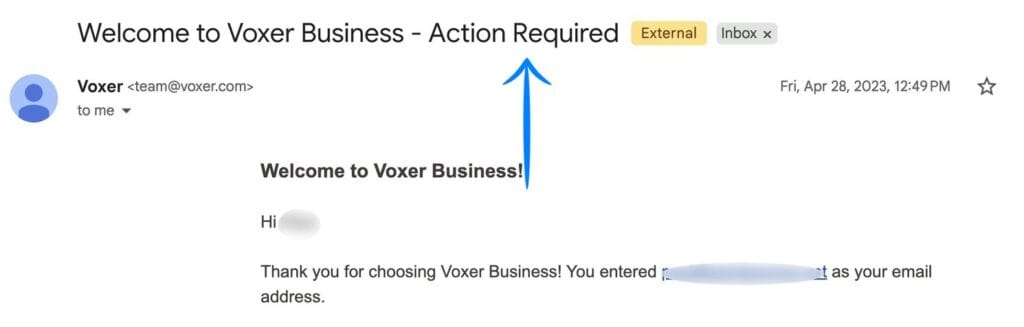
In our survey of professionals, 34% said seeing “Action required” in a work email increases their stress or anxiety.
Think about how often companies ask customers to act before telling them what’s going on.
You see “action required,” and your cortisol levels shoot up. And most of the time, there’s no need for it. Usually what you need to do is really no big deal.
Here are three examples where a few changes in our language can make all the difference. This exercise helps you step outside your own habits and read the email through your customer’s eyes.
Let’s take a look.
Put the task in the subject line
If you’ve got to reach out about something important, allow your subject line to set expectations without the drama.
Instead of: “Action required: Update your account to stay current.”
Try simplifying your request: “Please update your payment details by Friday.”
Sometimes there’s just no getting around it in customer emails. There is an action that must be taken, and an inevitable deadline.
If there’s a consequence, explain it in the first line. “We couldn’t charge the card on file. Please update it by Friday to keep your service active.”
Think about how different that lands than “URGENT: Update billing to avoid cancellation.”
The simplified request uses the plainest language. You’ve let the customer know what’s going on and what needs to be done to keep things going smoothly.
Related: How to Validate Email Lists in Amazon S3 with ZeroBounce
Give customers enough context to reply
Assumptions shouldn’t be a part of your customer service approach. Nor should lazy communication. Avoid asking your email recipients to strain to grasp what you mean.
Instead of: “Any updates on this?”
Try specificity: “Could you reply with a photo of the damaged item? Once we have it, we will send a replacement immediately.”
The customer may have written to you days ago. They may be on vacation. Perhaps they’re just bogged down.
Give them enough context to answer your email without digging through the thread. Even worse, the customer may misunderstand what you want and start trying to satisfy a different task than what you had in mind.
Clarity and directness – paired with politeness – are the ingredients that help both parties.
Related: Follow-Up Emails: How to Improve Your Reply and Conversion Rates
Let the friendliness come through in your words
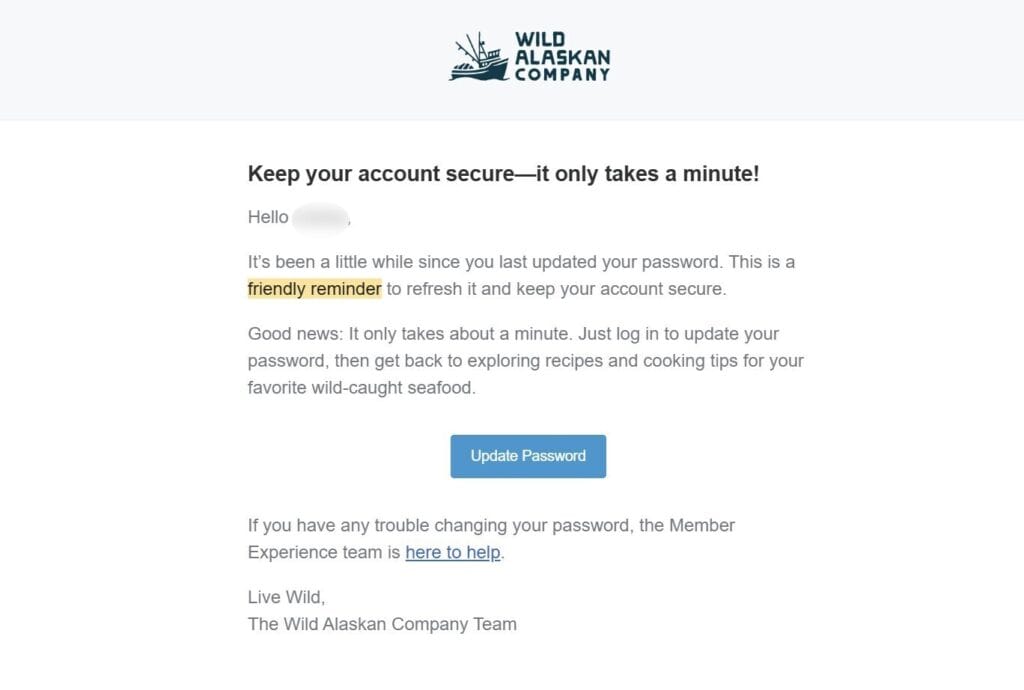
You’ve probably sent an email that started with “Friendly reminder.” But is that how the person on the receiving end reads it? In our survey, 21% of respondents viewed the phrase as passive-aggressive.
Instead of: “Friendly reminder: Your subscription expires next week.”
Try a more helpful approach: “Your subscription expires next week. If you’d like to continue using our service, you can renew it here. Let us know if you need any help.”
There’s nothing wrong with reminding your customers of something they may have forgotten. In fact, they may appreciate you doing so.
But you don’t need to announce that your reminder is friendly. Think about what would make the email genuinely helpful to the person opening it. Have you given them all the information they need? Have you made the next step easy for them?
That’s where the friendliness comes in.
Answer the question again. Graciously.
Nobody wants to repeat themselves, but sometimes we must.
Instead of: “As previously discussed, your refund was issued on Monday.”
Try this: “We issued your refund on Monday. It should appear on your card within five to seven business days. Please reach out if there are any more questions.”
If someone asks about their refund twice, they may still be looking at a charge on their billing statement. It may be causing them considerable stress.
Tell them when they can expect the money and when to get back in contact if it hasn’t happened.
Before you hit send on a customer email, read the subject line and the first sentence out loud. Would you say those words to a customer who called you for help? If it sounds terse when you say it aloud, it needs to be finessed.
And if you’d explain it differently on the phone or use some more courtesies, use those phrases in the email. There’s a world of difference between “No update so far.” and “Unfortunately, I don’t have an update on this, but will be keeping my eyes open.”
Email and the real world are not separate. The eternal advice applies: try a little tenderness. Let your customers know that you’re there to lend a helping hand – no matter what.
Of course, even the most thoughtful email won’t help your customers if it never reaches them. If you’re sending an important update to your entire customer base, use ZeroBounce to check your email list before you hit send.

Related Posts
-
 Read Story
Key takeaways AI agents can do more than help with email. They can read incoming messages, determine what needs to happen next, an...
-
 Read Story
You don’t need an email deliverability crisis to benefit from an email health check. Learn how to evaluate your email list, sender...
-
 Read Story
Key takeaways: Cut the clichés. Overused phrases like “reaching out,” “touch base,” and “hop on a call” make your emails sound gen...
-
 Read Story
Key takeaways Email list fatigue isn’t about how often you send – it’s about whether your emails still feel worth opening. The war...
-
 Read Story
Google is rolling out Gemini-powered features to Gmail that change how emails are summarized, prioritized, and surfaced in the inb...
-
 Read Story
You might have the best CRM in the game, but if your data’s dirty, your lead scoring won’t mean a thing. Before you assign a singl...