
Want people to read your emails? The rule is simpler than you think: send emails people actually want to receive.
It’s been 55 years since the first email was sent over ARPANET to a nearby computer. That message (likely something like “QWERTYUIOP”) is lost to time, but what followed isn’t.
Today, 93% of people use email daily. It’s truly a universal communication channel, with an unfathomable number of emails zigzagging the globe (and sometimes into outer space).
Email is so big that in 2022, the world started celebrating Email Day. And there are a lot of reasons for that. How many exactly? I’ve done the math.
2.5 quadrillion emails have been sent so far. What?
Written out, that looks like 2,500,000,000,000,000.
That’s a lot of emails!
And yet, two things are never guaranteed:
- Landing in the inbox
- Getting the recipient to actually read what you sent
That second part is where most emails fail.
Because one simple truth hasn’t changed:
People only read emails they want.
Why email began and why it exists
When people think of the light bulb, Thomas Edison comes to mind.
Email?
We can thank Ray Tomlinson.
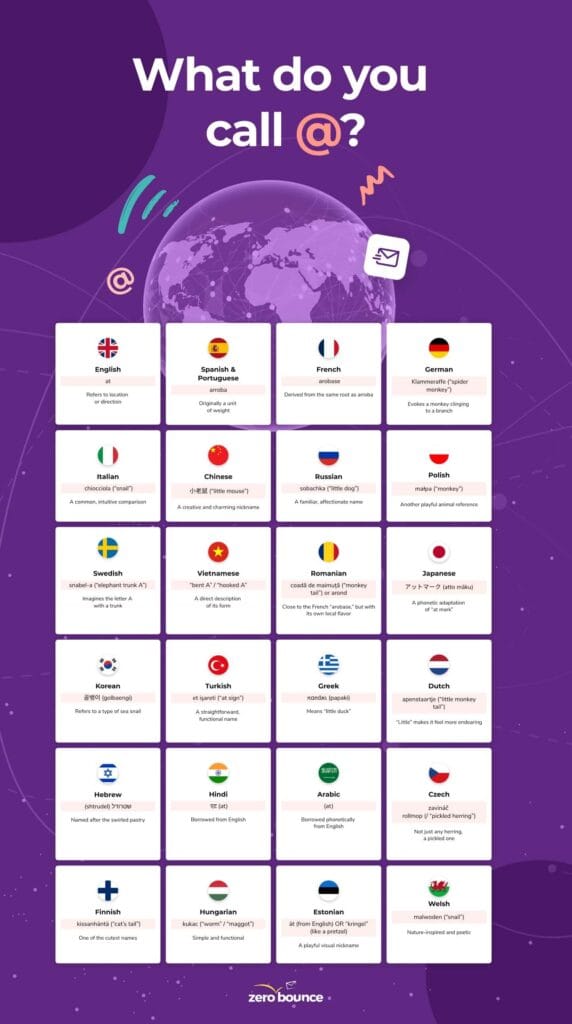
He sent that first email, and using the @ symbol was his brilliant idea. Tomlinson passed away in 2016, but we celebrate Email Day every April 23rd, because that was Ray’s birthday.
Tomlinson’s idea was simple: to send a written message from one computer to another. But it wasn’t just about transmitting information between machines. Email was always about human beings communicating with each other.
Email marketers have their work cut out for them. If you want to get email right, you’ve got to get a handle on compliance, deliverability, metrics, authentication, and warm-up.
But to get people to read your emails, you can’t lose sight of the big picture.
It’s a people business.
Your emails need to resonate. You must also be sending emails to real people — not spam traps, bots, or inactive accounts.
And once you’ve got those real people on your email list? You’ve got to serve them.
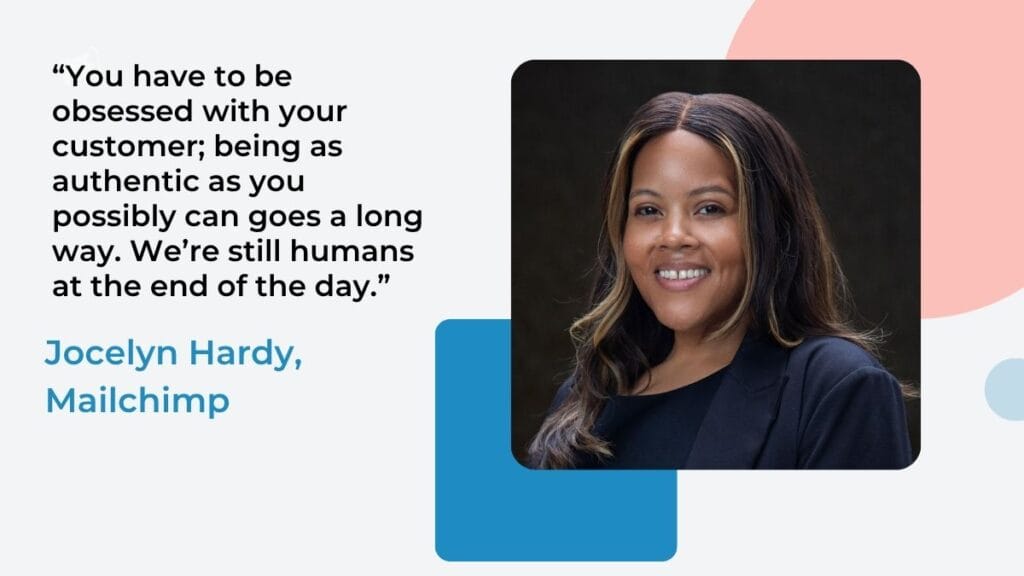
Take heed of this advice: “You have to be obsessed with your customer,” said Jocelyn Hardy of Mailchimp. “Being as authentic as you possibly can goes a long way. We’re still humans at the end of the day.”
That’s a giant point.
Nobody wants to get an email from a robot. They want to hear from a human being who understands them.
What Gmail understood early
Those brilliant developers at Google really understood that email is for people. They made email more enjoyable and more intuitive. It’s no mystery why Gmail has remained the leading email service since 2012, with more than 1.8 billion users around the world.
Gmail’s creator, Paul Buchheit, wanted to make email easier and eliminate anything that could make the inbox cumbersome. He and his team understood better than the rest that people seeing greater relevance in the inbox meant a better email experience.
Buchheit really knows email at its most basic level. The main ingredient is to send people emails they want.
The other side of the coin?
“The thing that gets you flagged is if people mark your email as spam,” Buchheit told me in an interview.
Email marketers must always scrutinize the emails they craft and their sending behavior. You have to know how spammers behave so that you know what not to do.
A good habit is to closely examine the emails you receive that make a positive impression.
You can learn a lot from spam
Fairly often, check your junk folder. Some messages are clearly spam, but you’ll probably see some legitimate companies with emails that land there. What do they have in common? You may be able to identify where they’re going wrong.
Knowing how people end up in spam can inform healthy behaviors that bolster your email deliverability. You have to know how things can go off track so that you avoid those missteps.
Related: Massachusetts Officially Proclaims April 23 as Email Day in Honor of Email Pioneer Ray Tomlinson
The simplest rule in email (that most people ignore)
If you ask a lot of email geeks what matters most, you’ll likely hear about the importance of having a good email list. It takes time to build an email list of genuine contacts, but you must nurture those subscribers once they’ve signed up.
Never take your audience for granted, because they can always go elsewhere.
So, let’s break it down. What’s the rule for getting people to read your emails?
It’s easier said than done.
Send people emails they want.
You get there by being thoughtful. At the same time, feel free to experiment. As long as you focus on your subscribers, you’ll be okay.
A part of that focus is being accommodating. You can’t accommodate your subscribers by confusing them. Keep it human, but also keep your emails understandable — from the subject line to the body to your CTA.
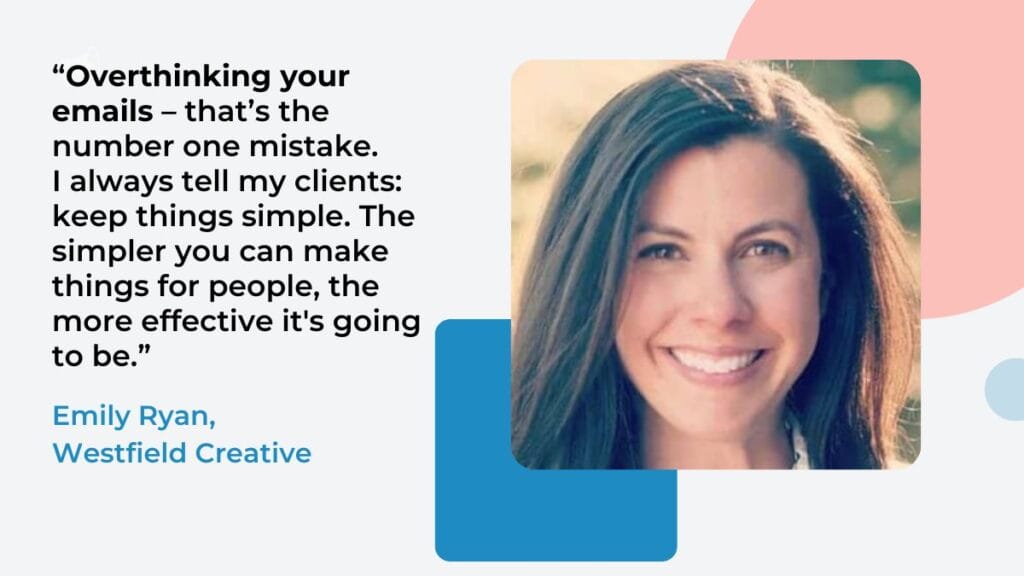
“The simpler you can make things for people, the more effective it’s going to be,” said Mailchimp expert Emily Ryan of Westfield Creative.
Here are some other considerations.
Your emails should be relevant
You don’t want to be ignored, and you certainly don’t want to get flagged as spam. If your message is off the mark, that’s an inevitable outcome. So, before you hit send ask the big question: Is this email relevant?
If you think only a sliver of your list will appreciate the email, don’t send it. You can’t risk alienating your subscribers.
This is where having more data about your subscribers is better. Segmentation can really pay off as you can cater your messages to those who would find it relevant.
Your emails should be timely
Sending your emails at set intervals, like on the same day of the week, will go a long way in maintaining your sender reputation. It also gets your subscribers to anticipate your emails.
Another consideration in your emails is frequency. Some email newsletters are weekly, others come out once a month. In some cases, even a daily email makes sense.
The key to frequency and timeliness lies in usefulness. How often do people want to hear from you? Remember, you’re competing with all of the emails in their inbox.
You’d be surprised how many huge brands mess this one up. Just be honest with yourself. If you’re selling industrial cleaning products, do people really want to get a promotional email from you every weekday? Believe it or not – this is a real-world example. Common sense will help you go far.
Your subject lines should inform and entice
Your subject line is how your subscribers find out what your email contains. First, it shouldn’t remotely look like spam. It’s even fine if the subject line is a pitch or CTA. Again, it’s fine as long as you’re sending people what they want.
Honesty is key. If your subject line offers something, you should be certain that it’s something you can provide. Nobody appreciates a “bait and switch” tactic.
I like to brainstorm subject lines and come up with a few before I run it through SubjectLine.com, founded by Jay Schwedelson.
I also consider this master tip from Jay to be really transformative for your emails. Are you ready?
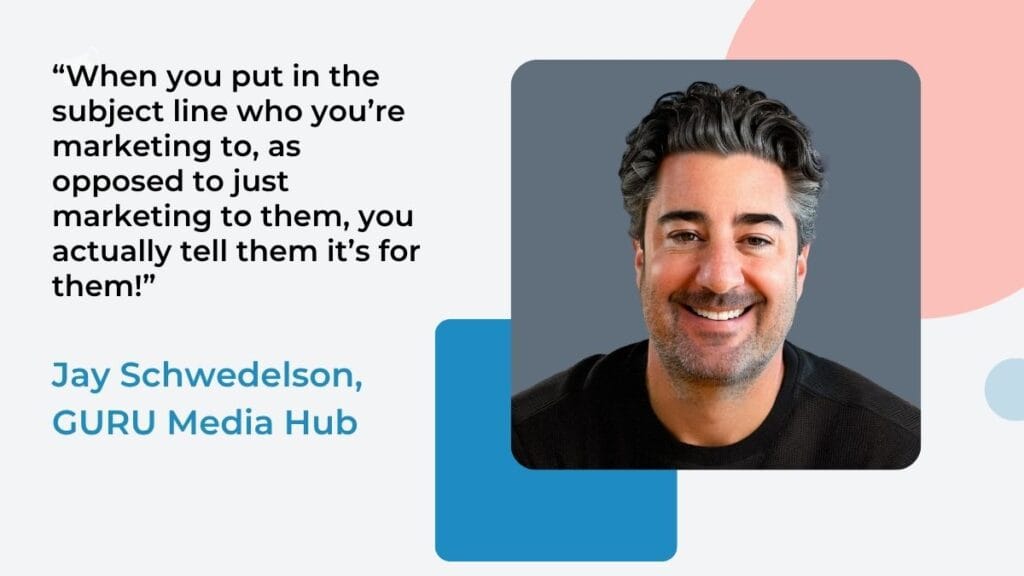
“When you put in the subject line who you’re marketing to, as opposed to just marketing to them, you actually tell them it’s for them!”
If the person you’re emailing is the person who orders the office supplies, imagine if the subject line encapsulated their duties?
This tactic is the ultimate and is majorly tied to the golden rule of email. You’re allowing the recipient to see themselves in the subject. They think: “that’s me!” And, if you play your cards right, they may also say: “And I want that.
Why most email advice leaves out the point
Good email marketers take care of the technical details. Email hygiene and list scrubbing keep the engine running, like a regular tune-up. But even with everything working the way it should, you still have to be a good driver.
“People don’t clean their lists enough,” said Vicky Smith of Flic Email. The email marketer went on: “They’re reluctant to let go of subscribers, even those who haven’t opened emails in months, which affects deliverability and costs.”
So yes, focus on list health, optimization, and metrics. It’s all a part of good emailing.
But don’t forget to chase meaning too: sending emails that matter to the person receiving them.
Running your emails through an inbox placement tester may show that your emails will show up in the inbox. But they still need to be read by a person.
The real way to honor Ray Tomlinson’s ideas for email
Email Day is a good day to reflect on email’s real purpose.
Email was created as an inherently human communication channel. Therefore, email marketers who reach their full potential never lose sight of the human element.
The best way to honor Ray Tomlinson’s vision is simple: use email the way it was meant to be used. Ray Tomlinson wanted email to serve people.
It’s not the other way around.
When we use email in smart ways that serve the recipients, the results are good for everyone. If someone doesn’t want to hear from you, or even if you’re not sure, don’t hit send.
It’s about respect.
Why human emails matter more than ever
With artificial intelligence now ubiquitous, the emails you write have more potential than ever. You can rise above the AI-generated emails by sending something authentic and fully human.
Will the email you and I write be as perfect as one composed by ChatGPT? No, thank goodness! It will be better than that. It will be you. You’re the only you out there. So don’t forget that.
There may be more noise from all of the technology than ever, but that’s your moment to shine. You can make a genuine connection by showing up in the inbox with something people want, and being as authentic as possible.
One simple question to ask before you hit send
What the world doesn’t need is just another email. And what we could stand a lot more of is genuineness. You’ll probably find that the harder you work on your emails, the more satisfied you’ll feel and the better your results will be.
It’s the Post-it note stuck on my laptop screen, sloppily handwritten in blue ink.
Would I actually want to receive that email? Whether I’m sending to one person or a whole list, it’s a constant reminder to be a good presence in the inbox.
I believe Ray would approve.
Table of Contents
- Want people to read your emails? The rule is simpler than you think: send emails people actually want to receive.
- Why email began and why it exists
- What Gmail understood early
- You can learn a lot from spam
- The simplest rule in email (that most people ignore)
- Your emails should be relevant
- Your emails should be timely
- Your subject lines should inform and entice
- Why most email advice leaves out the point
- The real way to honor Ray Tomlinson’s ideas for email
- Why human emails matter more than ever
- One simple question to ask before you hit send

Related Posts
-
 Read Story
Learn how clean email data and accurate call attribution help you reduce wasted spend and invest in the channels that drive revenu...
-
 Read Story
Key takeaways Looking spammy can hurt even legitimate email senders. Small mistakes can raise red flags with both mailbox provider...
-
 Read Story
Key takeaways High-income earners are constantly checking their inbox – but getting opened still depends on a subject line that fe...
-
 Read Story
Email marketing is the number one revenue generator, but SMS marketing skips the inbox to send marketing messages directly to cust...
-
 Read Story
You can have the most sophisticated email journeys in the world: beautifully designed, perfectly timed, fully automated — and stil...
-
 Read Story
Key points: Authenticity stands out in an AI-saturated inbox: As more professionals rely on AI to draft emails, messages are start...